Department of
Computer Science And Engineering
The Department of Computer Science and Engineering at Al Azhar College of Engineering and Technology was established in 2010 and offers a four-year undergraduate degree program with an annual intake of 60 students. The curriculum encompasses key areas such as Data Structures, Database Systems, Compiler Design, Computer Organization, Networking and Security, Data Mining, Machine Learning, and Artificial Intelligence. In 2023, two new undergraduate courses—Artificial Intelligence and Machine Learning, and Cyber Security—were introduced as allied branches of Computer Science and Engineering, each with an intake of 60 students. The department boasts excellent infrastructure, including well-equipped computer labs, modern classrooms, and a well-stocked library. With a team of competent and dedicated faculty, the department actively encourages student participation in co-curricular activities alongside academics. Additionally, the department has an MoU with ASAP to provide industry-standard training, ensuring that students gain practical exposure and are well-prepared for professional challenges.
Courses offered:
-COMPUTER SCIENCE AND ENGINEERING :60 SEATS
-ARTIFICIAL INTELLIGENCE AND MACHINE LEARNING :60 SEATS
-CYBER SECURITY : 60 SEATS
VISION
To generate professionally competent and socially responsible engineers to meet the challenges in the field of computer science and engineering.
MISSION
- To provide quality education to students with a strong foundation of Computer Science and Engineering through Outcome-Based Education.
- To make the students as far as possible industry ready to enhance their employability in the industries.
- To inculcate moral and ethical values in students to work with commitment and to serve society.
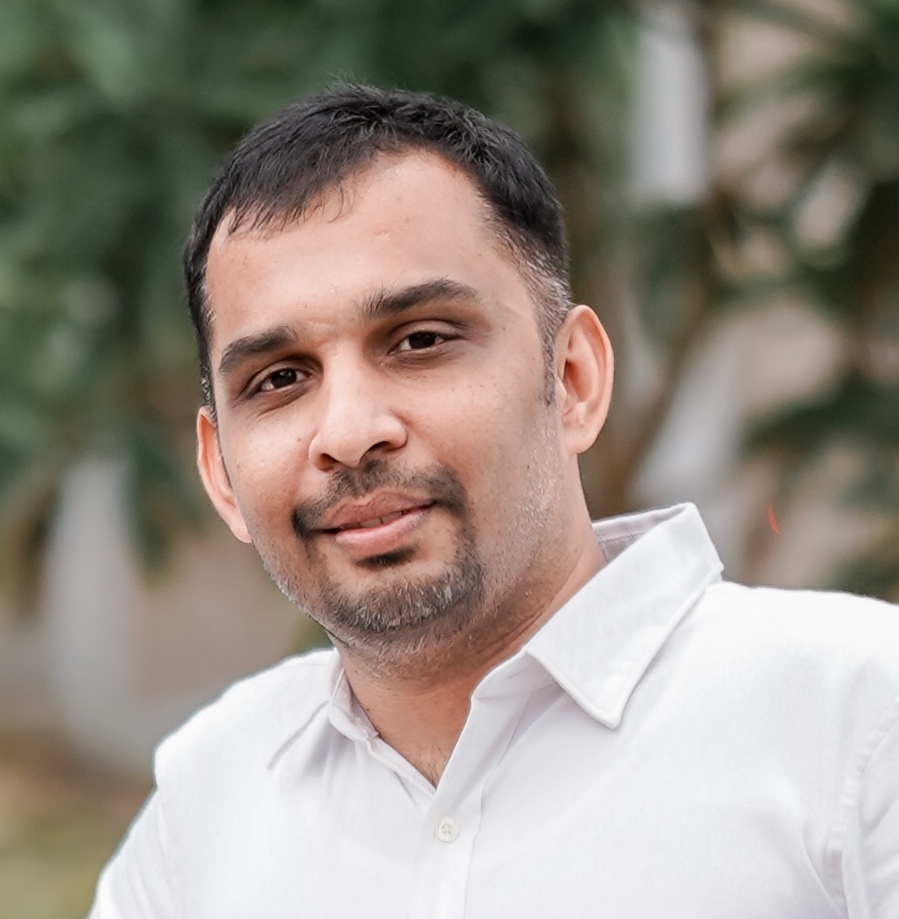
BOBY JOSE
Head of Department



PROGRAM EDUCATIONAL OBJECTIVES (PEOs)
The educational objectives for Computer Science & Engineering program are designed to produce competent engineers who are ready to contribute effectively to the advancement of computer engineering causes and to accommodate the needs of the community. These objectives are as follows:

PEO1
To transform the students to become competent professionals in the field of Computer Science and Engineering.

PEO2
To make the students able to analyze, design and develop computer applications to solve various kinds of computational problems.

PEO3
To become socially responsible engineers with good leadership qualities and interpersonal skills.
PROGRAM OUTCOME (POs)
Engineering Graduates will be able to
PO1: Engineering knowledge
Apply the knowledge of mathematics, science, engineering fundamentals, and an engineering specialization to the solution of complex engineering problems.
PO2: Problem analysis
Identify, formulate, research literature, and analyze complex engineering problems reaching substantiated conclusions using first principles of mathematics, natural sciences, and engineering sciences
PO3: Design/development of solutions
Design solutions for complex engineering problems and design system components or processes that meet the specified needs with appropriate consideration for the public health and safety, and the cultural, societal, and environmental considerations.

PO4: Conduct investigations of complex problems
Use research-based knowledge and research methods including design of experiments, analysis and interpretation of data, and synthesis of the information to provide valid conclusions.

PO5: Modern tool usage
Create, select, and apply appropriate techniques, resources, and modern engineering and IT tools including prediction and modeling to complex engineering activities with an understanding of the limitations

PO6: The engineer and society
Apply reasoning informed by the contextual knowledge to assess societal, health, safety, legal and cultural issues and the consequent responsibilities relevant to the professional engineering practice.

PO7: Environment and sustainability
Understand the impact of the professional engineering solutions in societal and environmental contexts, and demonstrate the knowledge of, and need for sustainable development.

PO8: Ethics
Apply ethical principles and commit to professional ethics and responsibilities and norms of the engineering practice.

PO9: Individual and team work
Function effectively as an individual, and as a member or leader in diverse teams, and in multidisciplinary settings.

PO10: Communication
Communicate effectively on complex engineering activities with the engineering community and with society at large, such as, being able to comprehend and write effective reports and design documentation, make effective presentations, and give and receive clear instructions.

PO11: Project management and finance
Demonstrate knowledge and understanding of the engineering and management principles and apply these to one’s own work, as a member and leader in a team, to manage projects and in multidisciplinary environments

PO12 : Life-long Learning
Recognize the need for, and have the preparation and ability to engage in independent and life-long learning in the broadest context of technological change.
PROGRAM SPECIFIC OUTCOME (PSO)
Engineering Graduates will be able to
PSO1
Attain the ability to design and develop hardware and software based systems.
PSO2
Use theoretical and practical concepts of various domains to realize new ideas and innovations for entrepreneurship, employment and higher studies.
Teaching Faculty
Our faculty members are our greatest asset. Through their enthusiasm and their ability to connect easily with the students, they contribute towards the overall professional and personal growth of the students.
Boby Jose
Roles Handled HOD, Asso Professor
Qualification M.Tech in Software Engineering
Experience 12 Years +6 months Experience in Teaching + 6 Months Industry Experience
Joining Date 05/12/2012
Anusha S
Shahana Sathar
Deniya Varghese
Roles Handled Asst. Professor
Joining Date 10/8/2022
Fitha Naseem
Lithu Mathew
Madheeha Husna
Aparna Anilkumar
Shilpa Sasidharan
Non-Teaching Faculty
Joby Jose
Qualification PGDCA
Roles Handled Lab Assistant
Seena M T
Designation System Administrator
Lab Facilities
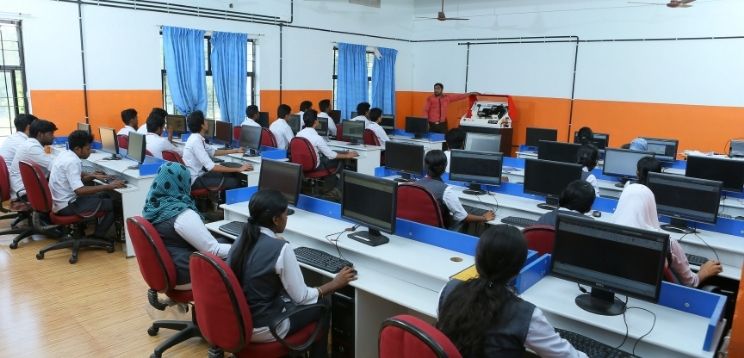
Excellent infrastructure is provided for the academic betterment of our students. To substantiate theoretical expressions, Al-Azhar has established modern laboratories that comply with the KTU regulations. The equipment, specimen and technical facilities in the lab create a superior ambience for the students to conduct experiments.
Programming Lab
This lab is designed to provide the students with good knowledge of various programming languages and develop problem-solving skills in them.
Various labs Scheduled are:
CS Workshop, C Programming, Data Structure, Object Oriented Programming
Hardware and Networking Lab
The hardware lab aims at the familiarization of hardware components of computer system and provides hands-on training for students in PC assembling. The lab also acquaints the students with the Networking Protocols and Communication using ports and sockets.
Language Lab
The language lab provides the students with audio and audio-visual aids to improve their English fluency and communication skill. The faculty ensures the best outcome by conducting language exercises and interactive sessions at different levels for the students.
Application Software Development Lab
This lab is used for practising database commands and developing GUI based applications using databases.
Operating Systems Lab
Teach the students about the principles of various computer operating systems. This understanding helps them to efficiently use programming languages to develop software built on top of the operating system. The lab deals with the basics of operating system architecture: process scheduling, inter-process communication, memory management, file systems.
Computer Centre
The Computer Centre provides internet and browsing facilities for staff and students of all branches. This lab remains open till 5.00 PM in the evening on all working days. The centre provides state-of-art computer and browsing facilities for everyone.
System Software Lab
This lab is used to build an understanding of the design and implementation of different types of system software like Linkers, Loaders, Macro Processors etc.
Compiler Design Lab
This lab is used to enlighten the student with knowledge base in compiler design and its applications.



ISO 9001:2015 certified Institution
Affiliated to A.P.J Abdul Kalam Technological University
Approved by All India Council for Technical Education
Accredited by NAAC (National Assessment and Accreditation Council)
Call
Office 0486 222 79444
Principal 9746 144 555
Admission 9446341518
Women Helpline 9446831000